
Being a grandparent is different from being a parent.
A practical pathway for grandparents who want to support their children and grandchildren well in a changing world.
Understand what has changed. Support without taking over. Stay connected as they grow.
Includes the Healthy Minds for Parents community
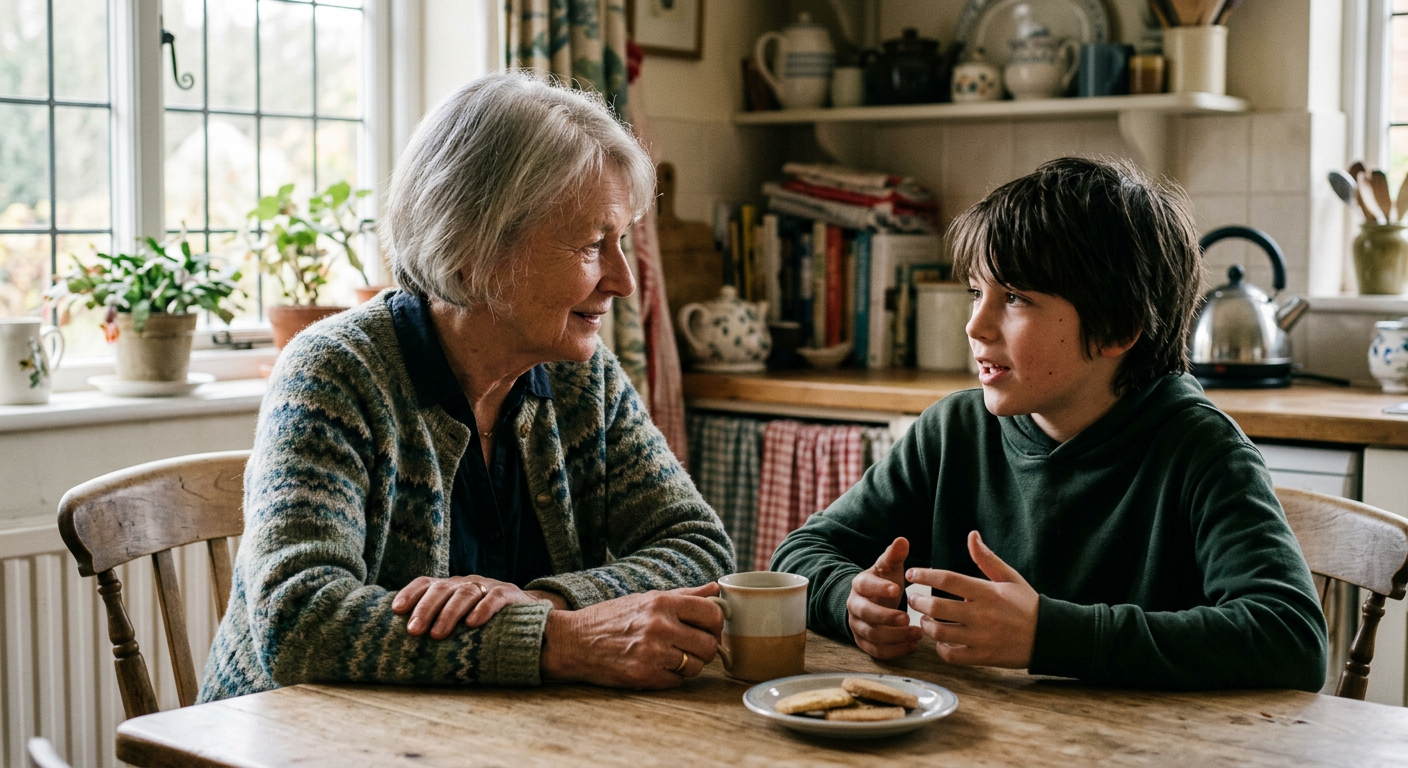
A calm, connected presence in your family
You may care just as deeply, but your role has changed. Sometimes your family needs your help. Sometimes they need you to listen. Sometimes you may see things differently. Sometimes the most helpful thing you can do is step back.
The Steady Grandparent helps you understand that changing role and become a calm, connected and psychologically informed presence within your family.
Who it is for
Everyday grandparents who are involved in family life and want to understand their role, stay connected, offer useful support and navigate family relationships thoughtfully.
It is not a grandparenting rulebook, and it is not designed specifically for grandparents who have become primary carers through kinship arrangements.
The world your grandchildren are growing up in feels different
Many grandparents provide regular childcare, practical help, financial and emotional support — to grandchildren and to their adult children.
What has changed
- Parenting language has changed.
- Our understanding of emotions and child development has changed.
- Children are growing up with smartphones, social media, greater academic and social pressures and constant access to information.
- Ideas around discipline, boundaries, neurodiversity, mental health and emotional regulation can feel unfamiliar.
Grandparents often ask
- Am I helping or interfering?
- Why do they parent so differently?
- Should I say something if I am worried?
- How do I support my son or daughter without telling them what to do?
- Why does my teenage grandchild not want to talk to me anymore?
- How much should my family expect me to do?
Existing UK support tends to focus on serious difficulties — kinship care, estrangement or loss of contact. Those services matter, but they leave grandparents whose relationships are broadly intact relatively unsupported. The Steady Grandparent is designed for that middle ground.
It develops the capacity of the grandparent
It does not tell grandparents how their grandchildren should be raised. Instead, it helps you think about:
- Their role.
- Their relationships.
- Their responses.
- The kind of presence they want to bring to their family.
No generation against another
The message is not:
“What you did was wrong and this generation knows better.”
Nor is it:
“Parenting today has gone soft.”
Instead:
We know things now that we did not know then.
And some of the things previous generations understood — showing up, sticking around, keeping perspective and being there when life gets difficult — matter as much as ever.
Regulate, recover and adapt
The aim is not to turn grandparents into counsellors or psychologists. It is to strengthen your ability to regulate, recover and adapt.
Regulate
Notice what is happening in yourself before reacting.
- Why am I so upset about this parenting decision?
- Am I worried, offended, frightened or feeling excluded?
- Do I need to respond now?
Recover
Navigate disagreement, disappointment or difficult family moments without allowing them to define the relationship.
- Grandparents may sometimes overstep.
- Parents may sometimes say something hurtful.
- Teenage grandchildren may withdraw.
- Psychological fitness allows room for repair rather than perfection.
Adapt
Recognise that relationships change — and adjust while staying connected.
- The relationship with an adult child changes when they become a parent.
- The relationship with a grandchild changes from toddler to child to adolescent to adult.
The Five Daily Habits support grandparents too:
- Notice one belief
- Name that feeling
- Practise stillness
- Reach out and connect
- Name the good stuff
Not only skills for children — useful tools for the adults around them too.
Not a lack of love or experience
Often it is uncertainty about how to use those things well in a role that has changed. The pathway helps you move:
From
“Should I say something?”
To
“I can decide whether this moment needs listening, support or advice.”
From
“They never did this when you were young.”
To
“I can be curious about why they are doing it differently.”
From
“I need to make this better.”
To
“I can be alongside them without having to fix it.”
From
“My teenage grandchild does not want me anymore.”
To
“The relationship is changing and I can find new ways to stay connected.”
From
“Everyone expects me to help.”
To
“I can be loving and generous while still having boundaries.”
From
“I am worried sick about all of them.”
To
“I can recognise what is mine to influence and what is not.”
A short, practical pathway in five areas
Finding your place
- Understanding the shift from parent to grandparent
- Helping without taking over
- Expectations, childcare and boundaries
- Knowing when to step in and when to step back
Understanding today's children
- What we now understand about thoughts, emotions, behaviour and regulation
- What has changed since you raised your own children — and what has not
- The pressures children and teenagers navigate, without catastrophising modern childhood
Supporting the parent as well as the child
- Recognising that sometimes it is your own son or daughter who most needs you
- Listening rather than immediately advising
- Supporting tired or overwhelmed parents
- Navigating differences in parenting choices — disagreeing without undermining
Staying connected as they grow
- A relationship that can change with age
- Connection with younger children, tweens and teenagers
- Listening without interrogation; interested without being intrusive
- Being another safe, trusted adult
Being the steady one
- Managing worry, frustration and guilt
- Maintaining boundaries
- Repairing relationships when things go wrong
- Knowing what you can and cannot control — and looking after your own psychological fitness
Sitting alongside you, not telling you how
“I’ve raised children too. I’ve got things right and I’ve got things wrong. We’ve learned a lot since our children were small. And we’re still learning.”
Old-school wisdom alongside modern psychology — translated into ordinary family life, calmly, practically and without shame.
You will leave feeling
- More confident about their role
- Better able to understand behaviour before reacting to it
- More comfortable supporting adult children without automatically giving advice
- Better equipped to navigate disagreement
- More able to stay connected to grandchildren as they grow
- More confident about setting their own boundaries
- Less responsible for fixing everything
- Aware of the difference their relationship can make
Each section includes
Nana's kitchen table
A relatable family situation.
What's going on here?
The psychology explained simply.
Try saying…
Useful language for real moments.
Instead of fixing…
A different way of responding.
Your psychological fitness rep
One small thing to practise.
Take this with you
One idea worth remembering.
Start The Steady Grandparent
Buy this pathway on its own, or get every pathway together. Both include community access.
The Steady Grandparent
£10one pathway
- Full access to The Steady Grandparent
- Healthy Minds for Parents community
Every pathway, one price
£35all pathways
- Better Prepared, Resilience, Anxiety, Transitions and The Steady Grandparent
- Future pathways as they are added
- Healthy Minds for Parents community
You do not have to parent your grandchildren.You get to be something different. A steady adult.
- Someone who listens.
- Someone who keeps perspective.
- Someone who remains interested.
- Someone who is there when life gets difficult.
- Someone who can support the parent as well as the child.
Old-school wisdom. Modern psychology. Stronger family relationships. This is psychological fitness — for grandparents too.
The £35 Everything option includes The Steady Grandparent plus every other pathway. Compare pathways